Farmland Pollution Prevention
Background
- Understanding Farmland Heavy Metal Pollution To understand the state of heavy metal pollution in Taiwan's farmland soil, the Ministry of Environment began conducting soil surveys in 1982, focusing on possible contamination by heavy metals, including arsenic, cadmium, chromium, mercury, nickel, lead, zinc, and copper. The aim is to assess the extent of soil pollution and ensure farmland safety and sustainability. Since 2002, more targeted investigations have been carried out to verify the extent and boundaries of pollution in specific farmlands, underscoring the government's commitment to protecting land resources.
- Farmland Soil Pollution Prevention Strategies From 2003 to 2009, local environmental protection bureaus began investigating and monitoring farmland with high pollution potential. Additionally, from 2010 to 2017, central environmental protection agencies also implemented investigation projects to systematically verify soil pollution across farmland nationwide. Based on the findings, approximately 1,200 hectares of farmland were found to be polluted. After years of effort, improvement work was completed by the end of 2021, and the government simultaneously enforced pollution source controls to achieve soil pollution prevention goals.
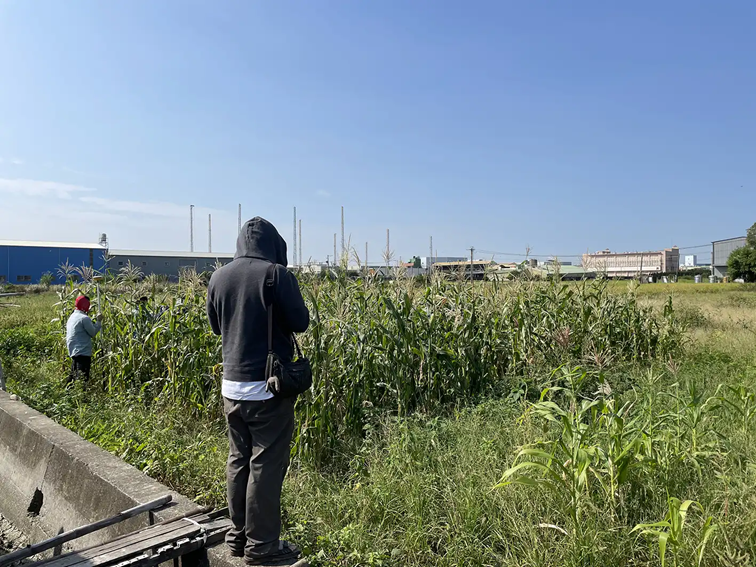 Figure 1. On-location inspection and recording
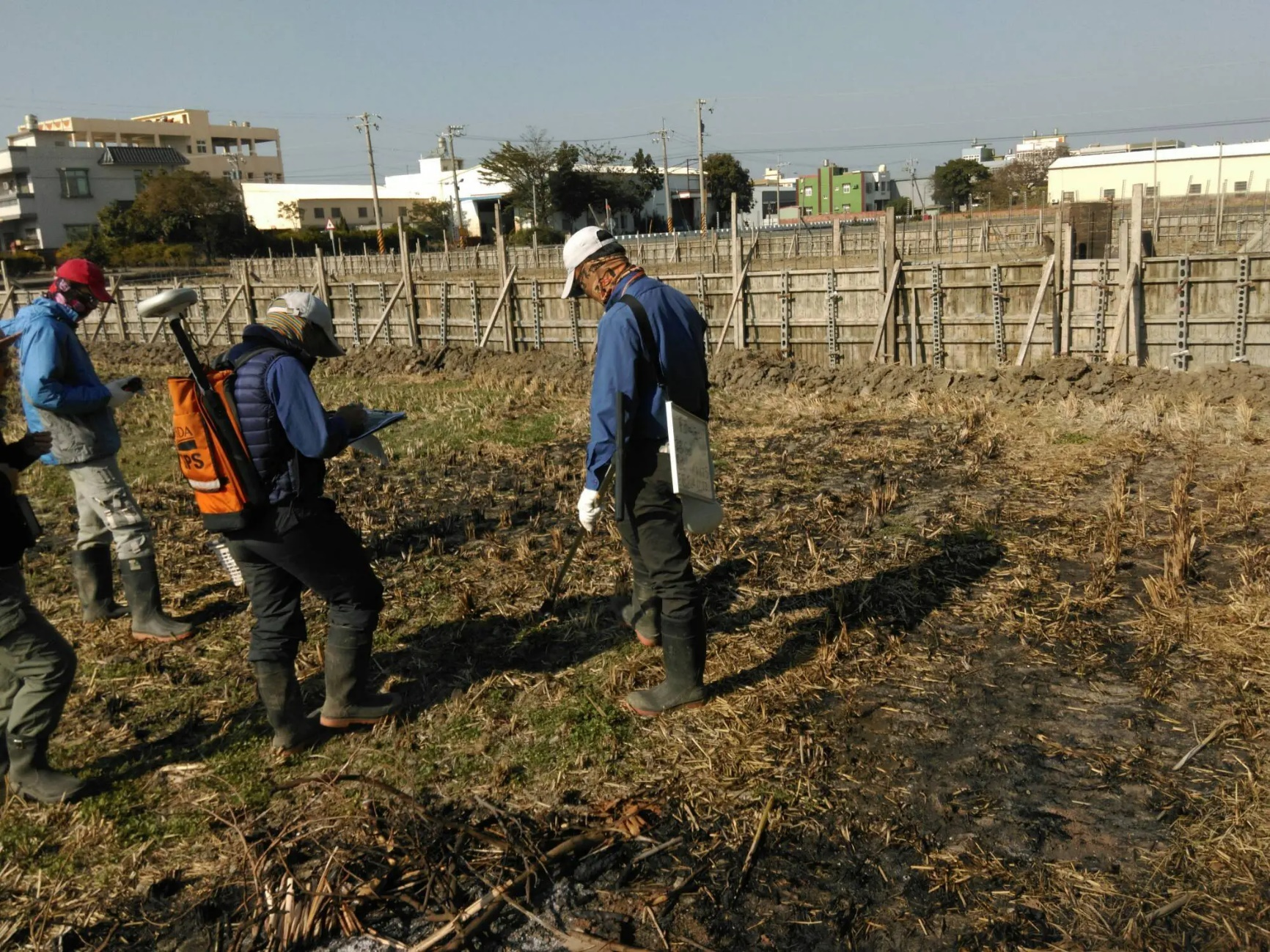 Figure 2. Soil sampling
Implementation Process and Achievements
In 2024, 2 new farmland Control Sites (with an area of approximately 0.22 hectares) were added to the regulatory listing and 6 sites (approximately 1.38 hectares) were removed, all located in Changhua County from the regulatory listing. As of the end of 2024, a total of approximately 1,221.1 hectares of contaminated farmland (including Control Sites and Sites with a Limited Correction Period) had been listed, as shown in Figure 3. The total budget for farmland soil remediation reached approximately NTD 2.76 billion, including approximately NTD 330 million for fallow compensation, around NTD 2.25 billion for pollution reduction, and approximately NTD 180 million for the elimination and destruction of crops in contaminated farmland.
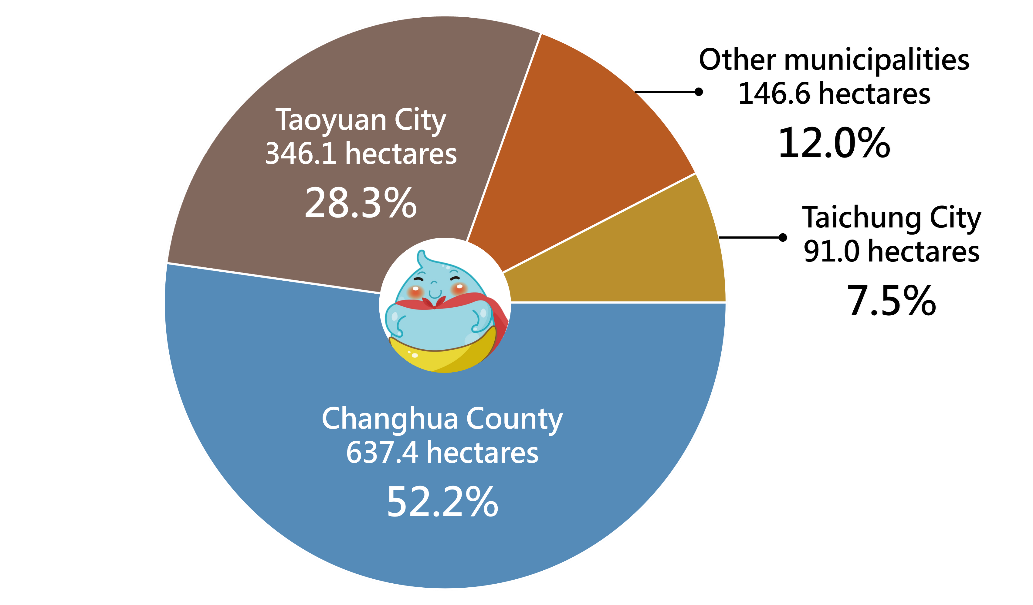
Note:The statistics are accurate as of December 2024. Data was accessed on February 11, 2025.
Figure 3. Cumulative percentage of controlled and improvement deadline farmland in Taiwan- Environmental Protection and Food Safety In collaboration with the Agriculture and Food Agency of the Ministry of Agriculture, the EMA completed 472 soil sampling and analysis operations on farmland in 2024. The results showed that heavy metal concentrations in the soil of farmland did not exceed the Soil Pollution Control Standards required for farmland used for edible crops.
- Regular Inspections and Early Warnings for Contamination For farmland where past investigations revealed heavy metal concentrations exceeding the Soil Pollution Monitoring Standards for edible crop farmland but below the Control Standards, regular soil monitoring was conducted in accordance with Article 6 of the Soil and Groundwater Pollution Remediation Act. In 2024, a total of 339 samples were analyzed, of which 12 were found to have heavy metal concentrations exceeding the Soil Pollution Control Standards required for farmland used for edible crops. These 12 samples were distributed as follows: 5 in Taoyuan City (copper), 5 in Changhua County (copper, zinc, nickel), and 2 in Yilan County (arsenic, copper). Of these 12 cases, 5 in Taoyuan City and 3 in Changhua County completed remediation and were removed from the regulatory listing by the end of 2024. The remaining cases are either under evaluation or included in remediation plans, with full remediation expected within two years. Among the 339 samples from regularly monitored farmland, 315 were located in irrigation areas, distributed across 50 irrigation groups. These areas, totaling approximately 6,315 hectares, were designated as pollution early-warning irrigation areas. The distribution is shown in Figure 4. The remaining 24 samples were collected from non-irrigated areas, with a total plot area of approximately 150 hectares of farmland, protecting a total of 6,465 hectares of agricultural soil.
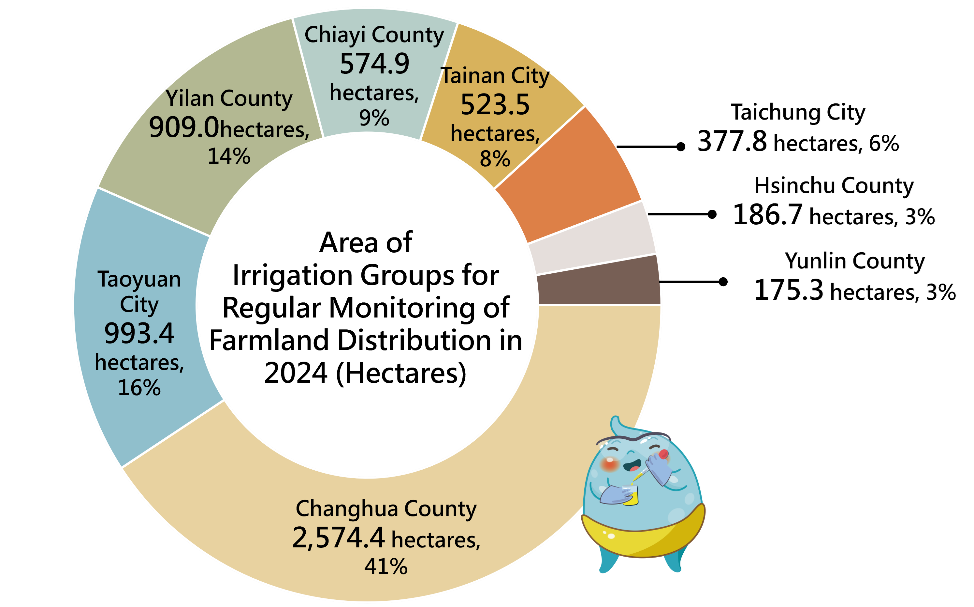
Note:The statistics are accurate as of December 2024.
Figure 4. Statistics on area of irrigation groups for regular monitoring of farmland distribution in 2024Future Outlook
Based on the survey results, the primary source of farmland contamination stems from the pollution of irrigation canal water. Relevant government agencies will continue to collaborate in protecting irrigation water quality. In the future, management measures will be implemented in various phases by continuously monitoring farmland pollution trends, strengthening pollution prevention and control as well as liability recovery, establishing a soil quality database, coordinating inter-agency land-use planning and management strategies, and developing mechanisms for sustainable protection of high-quality soils. The ultimate goal is to ensure the sustainable use of precious soil resources, maintain good soil quality, and pass on a healthy environment to future generations.