Soil Quality
Background
Soil is a finite and non-renewable resource of the Earth, with essential functions such as purifying water, producing food, storing carbon, and buffering or adsorbing pollutants. Soil quality refers to the inherent capacity of soil within natural ecosystems, including sustaining plant productivity, reducing environmental pollutants, maintaining soil health, and safeguarding the quality of life and health of plants, animals, and humans. These functions promote sustainable agricultural development, protect soil and water resources, and enhance resilience to climate change and extreme weather events such as floods and droughts.
Taiwan’s soils are diverse and abundant. However, with population growth, socio-economic development, and urban expansion, the potential for soil pollution has increased. To meet the policy needs of sustainable soil quality management, the Ministry of Environment (MOENV) has conducted systematic surveys of major soil types in both flatland and slopeland areas since 2013. These efforts have established baseline data on soil characteristics, allowing a comprehensive understanding of soil conditions in Taiwan and providing scientific foundations for soil management strategies flatlandes to protect valuable soil and groundwater resources.
Implementation Process and Achievements
As existing soil survey data in Taiwan had primarily focused on agricultural production management and were not widely applicable, MOENV began a phased nationwide investigation in 2013 to systematically establish soil characteristic parameters relevant to soil quality and pollution management. By conducting representative soil series surveys in flatland regions, 116 soil profiles (Figure 1) and 552 sets of stratified soil samples were collected and analyzed across 15 counties and cities, covering about 430,000 hectares of land. This represents approximately 68% of Taiwan’s total flatland arable land. More than 30,000 soil characteristic parameter records were established.
Given that flatland soil surveys had already covered Taiwan’s major soil types, and considering the severe impact of climate change on soil resources—particularly in slopeland areas with steep terrain, shallow soils, and intensive human activities—MOENV launched representative slopeland soil surveys starting in 2022. These surveys aimed to improve the completeness of Taiwan’s soil baseline data. In 2022, the National Soil Property Characterization and Baseline Monitoring, Investigation, and Management Project surveyed 16 representative slopeland soil series, covering a total area of approximately 205,000 hectares, achieving a coverage rate of 35% of slopeland areas nationwide. The distribution of surveyed flatland and slopeland soils conducted by MOENV over the years is shown in Figure 2.
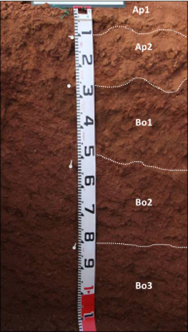 Figure 1. Soil profile of the Pingzhen Series
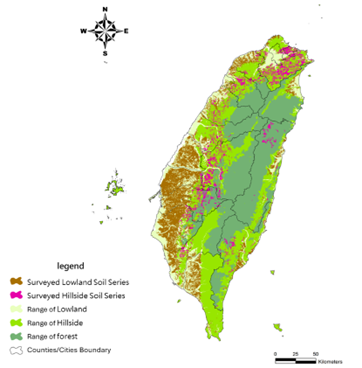 Figure 2. Distribution of surveyed representative flatland and slopeland soil series
MOENV has long conducted national soil quality monitoring, accumulating valuable data and experience. In recent years, systematic soil surveys have also been carried out in environmentally sensitive areas such as reservoir watershed. These data play a critical role in policymaking for soil resource management, quality protection, land use, and soil pollution control. Additionally, MOENV continues to monitor the distribution of pollutants in Taiwan’s soils, including persistent organic pollutants (e.g., dioxins, PFAS), plasticizers, and polycyclic aromatic hydrocarbons (PAHs). Such information serves as a reference for the planning and formulation of Taiwan’s soil strategies, ensuring effective protection and management of land and the environment.
Soil-related information and survey results are available on the Taiwan Soil Information System
Future Outlook
In response to the global trend of net-zero emissions and environmental change, sustainable soil resource management has become a critical issue in environmental protection. Moving forward, efforts should focus on continued systematic soil surveys and monitoring, the establishment and integration of soil regulations, the sharing and application of soil data, the advancement of soil science research, and the promotion of sustainable land management practices. These initiatives will ensure the effective protection of Taiwan’s soil and groundwater resources.