Groundwater Quality and Monitoring Management
To establish long-term data for groundwater quality across the country and to monitor the status of groundwater quality, the Ministry of Environment (MOENV) has constructed over 460 regional groundwater monitoring wells designed for background water quality investigations, as shown in Figure 1.
Given the high cost of groundwater monitoring well installation and the critical influence of well conditions on the representativeness and reliability of groundwater quality monitoring data, regional monitoring well management activities have been carried out in phases since 2004, including well condition assessments, well maintenance, equipment replacement and upgrades, and elevation verification. In addition, drawing upon the life-cycle management concept for groundwater monitoring wells and lessons learned from years of implementation, a series of regulations, guidelines, and operation manuals for well installation, assessment and maintenance, and well decommissioning have been progressively established since 2010. These measures have enabled the sustainable management of the groundwater monitoring well network and ensured the quality and representativeness of groundwater quality monitoring data in Taiwan.
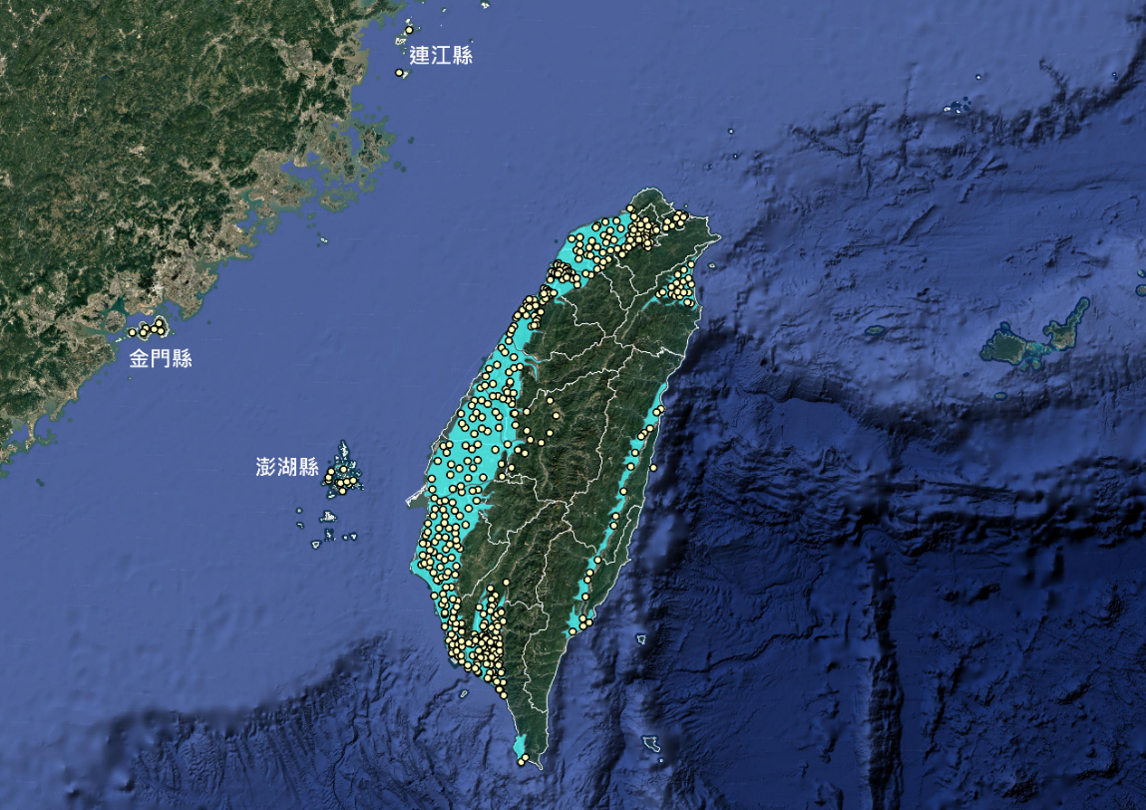 Figure 1. Distribution of Taiwan's Regional Groundwater Monitoring Wells
Monitoring Well Sampling Frequency and Analysis Parameters
Regional groundwater monitoring wells are generally sampled once a year to track background groundwater quality conditions. Monitoring parameters include general water quality indicators (e.g., temperature, pH, electrical conductivity, total hardness, total dissolved solids, chloride, and ammonia nitrogen), heavy metals (e.g., cadmium, lead, chromium, arsenic, copper, and zinc), and volatile organic compounds (VOCs) such as benzene, toluene, ethylbenzene, xylene, chloroform, tetrachloroethylene, and trichloroethylene, totaling approximately 50 parameters.
Historical monitoring results indicate that VOC concentrations in regional groundwater monitoring wells have remained below groundwater pollution monitoring standards. In contrast, compliance rates for manganese and ammonia nitrogen are relatively lower, primarily due to geological conditions and anthropogenic activities, respectively. Regular monitoring will continue to track long-term trends in background groundwater quality.
Please refer to the Environmental Water Quality Information
Future Outlook
In response to the challenges of climate change and extreme weather events, groundwater resource management must evolve toward a more integrated and sustainable framework. Future efforts will focus on strengthening groundwater quality monitoring, enhancing interagency collaboration and data sharing, and improving integrated groundwater management strategies. Through the expansion of the groundwater monitoring network, the development of cross-sector data integration platforms, and the consolidation of monitoring resources, management will progressively advance from water quality monitoring to comprehensive groundwater resource management, thereby promoting source protection and ensuring the sustainable use and safety of groundwater resources.